in the pool (tokyo summer)
August 8, 2025 · life, thoughts
some ramblings
On the flight over, the ocean looked like ink—flat from that height, heavy with what it refused to show. AirPods drowned out the cabin noise. My breathing was the only thing I could measure.
Months later, I was sitting in the Tokyo Metropolitan Library, finally writing. On the way, I passed a primary school. The gates were open. Children were playing baseball on the field. The air was thick enough to hold sound; it made their shouts feel close, even from the sidewalk. Their game had no clear beginning and no end, just like mine.
The library breathed a disciplined quiet; inside, my breathing felt too loud. Outside it was summer—damp Uniqlo Airisms, sunscreen, hot asphalt. Even small distances felt intentional—the distance between seats, the timing of footsteps. Bags were placed beneath chairs and not touched again. People arrived, badged in, and remained.
The room traded the effort of navigating the city for the discipline of staying. The quiet did not offer relief so much as structure. It set a pace and expected it to be kept.
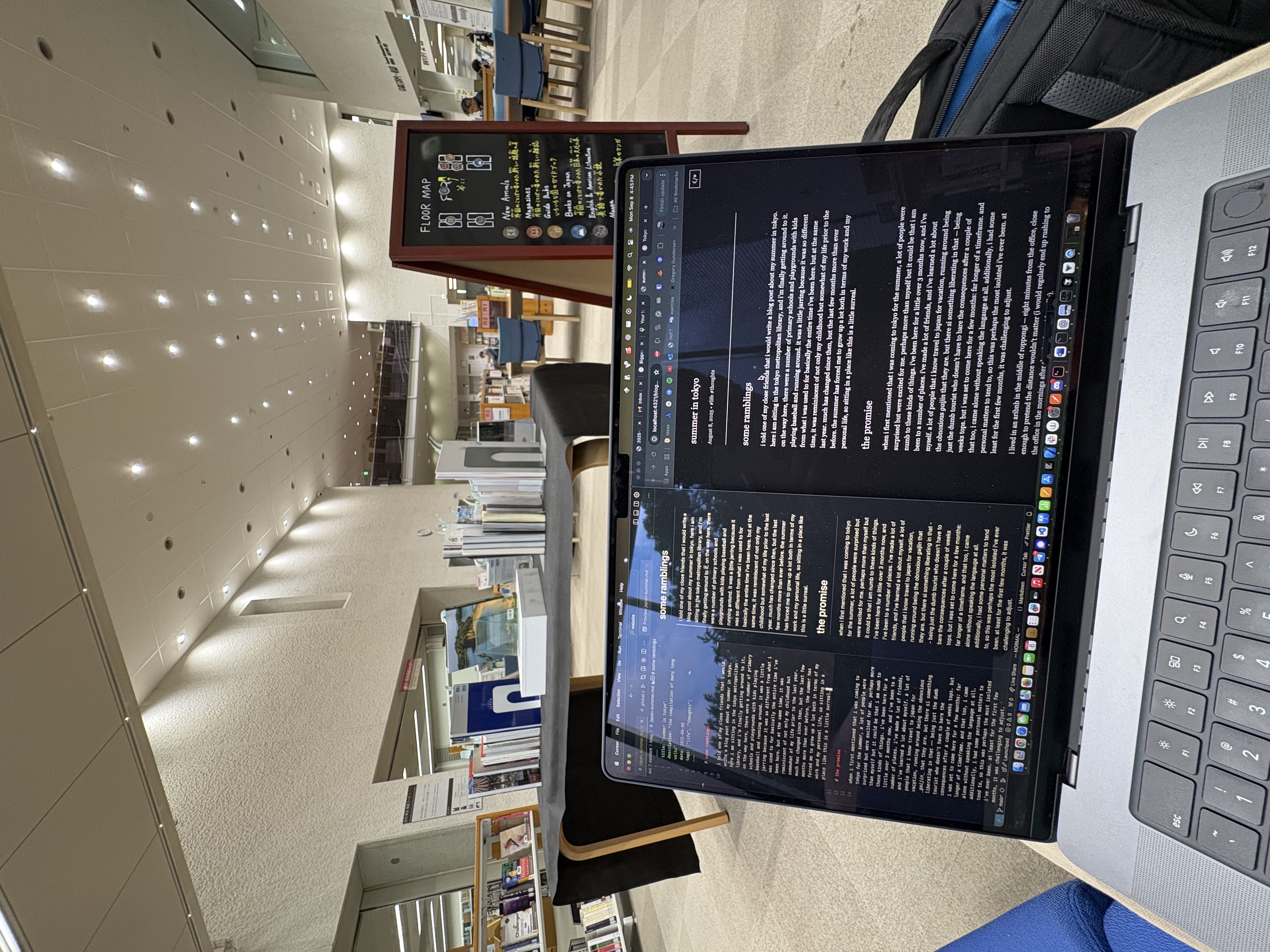 here i am writing this. i’m not sure how i feel about it.
the promise
When I told my friends I was going to Tokyo for the summer, they reacted as if I had already returned. They were excited for me, sometimes more than I was. I remember nodding and accepting their enthusiasm like a gift I don’t know where to put. I understood it later. My body didn’t wait.
Most people I know come to Japan the way they visit an exhibit or museum—wide-eyed, temporary, forgiven. There is a kind of freedom in that. You can be ignorant and call it charm. You can misread everything and leave before it has consequences.
 i was worried i was going to get another visit from the keisatsu
I stopped at the mouth of a Kabukicho back alley near the Godzilla statue—so narrow it felt like the city had drawn its shoulder in. Signs stacked upward in layers, bars and ramen shops tucked behind every corner. Touts 1 in gaudy chains drifted in and out like it was nothing. The air turned: urine, trash, stale smoke. Near Toyoko, kids hovered under LED light—gyaru makeup too bright for tired faces, cigarettes passed between small hands. I realized I’d been holding my breath.
 uh oh..
I wasn’t here the way people come on vacation—wide-eyed, temporary, forgiven. I lived here. Which meant going in: through doors that didn’t care if I could read the signs, down hallways where the air changed and my instincts lagged. My cousin’s hotspot iPhone 4 sat half-dead in my pocket like a failing lifeline. If I didn’t come back out, it would be a missing person report in a language I could hardly speak, and then silence.
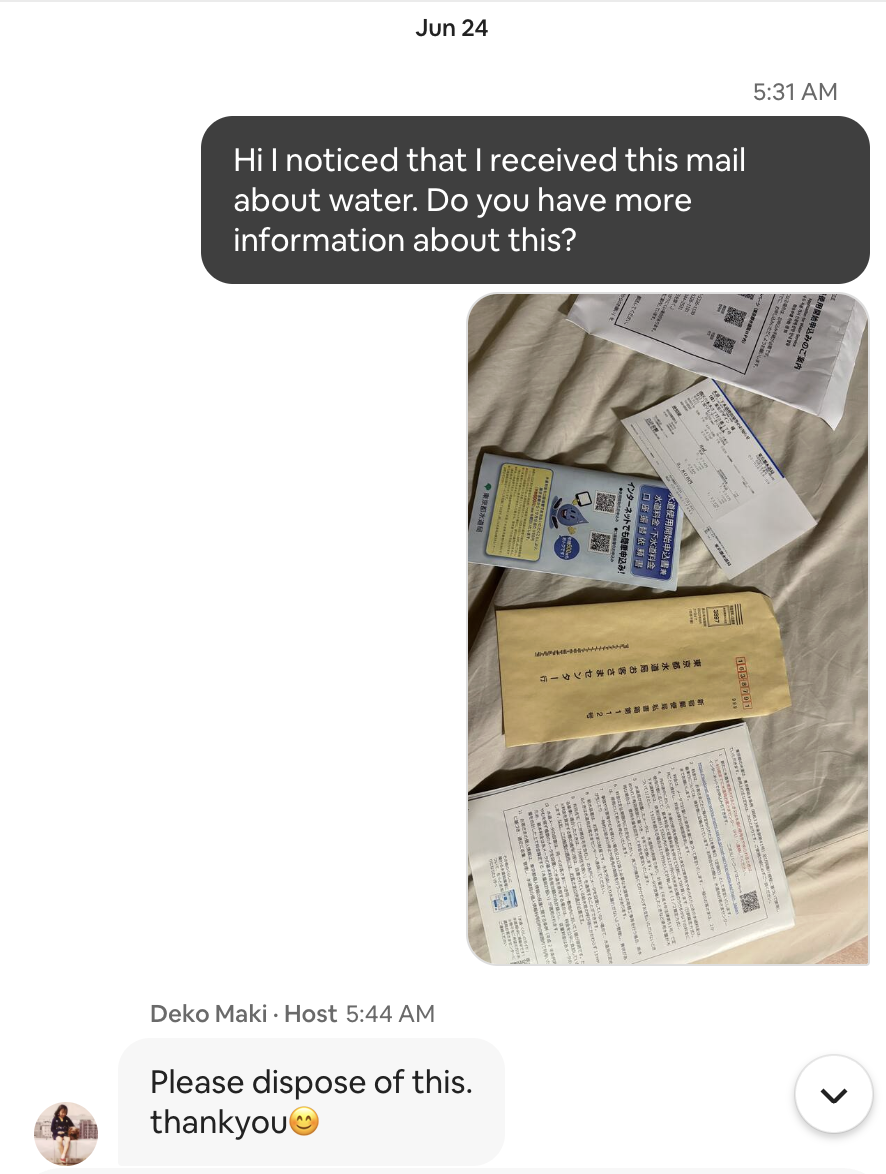
The first night I arrived, I couldn’t find my Airbnb. I walked the block twice, misread the entrances, slipped into the wrong building. There was a FamilyMart on the corner and a narrow back alley that smelled like damp concrete. I messaged the host. Again. And again, until I found the door.
And in the small room I had rented in a city where I was functionally illiterate, I did the most Gen Z thing possible: immediately checking the Wi-Fi. It flicked and failed. I stood hunched near the entrance, where the signal was barely alive, and called my concerned mother over WhatsApp.
And that was just the beginning.
Not the internship. Not the sightseeing. Not the friendships I would later make. This was the beginning: the comforts I usually carried—language, familiarity, the ability to disappear—were gone.
 i still can’t believe i brought a crushed belvita all the way from austin. it was multiple years old and unfortunately was my first meal in tokyo.
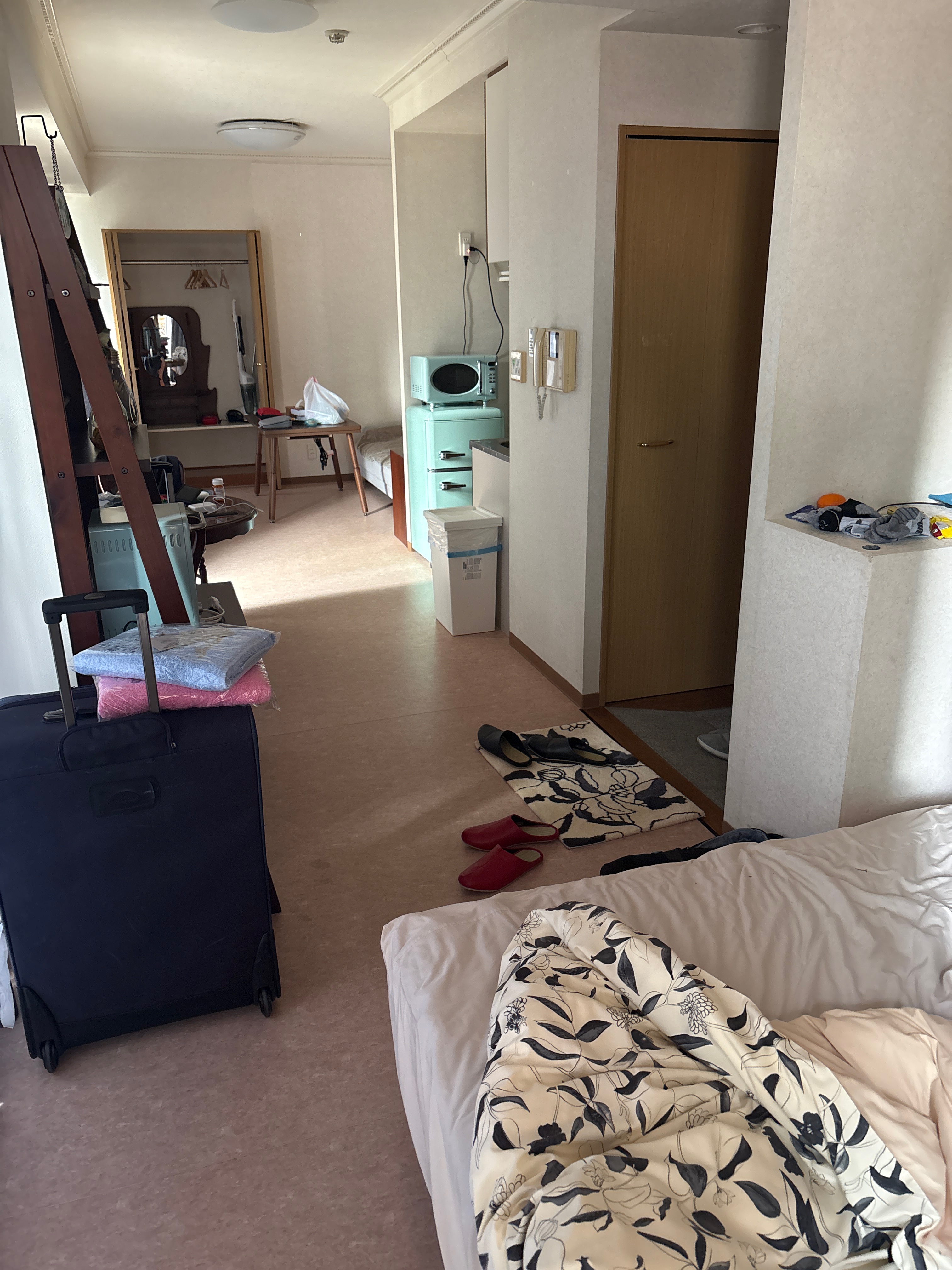
It was better than last summer’s place in San Francisco’s financial district by a lot. But it still wasn’t much.
A yellow air conditioner that never stopped working. Slippers waiting at the door. A fridge the color of cheap mint. A TV that I never used. And a closet so shallow it felt like the room was telling me, early, not to unpack.
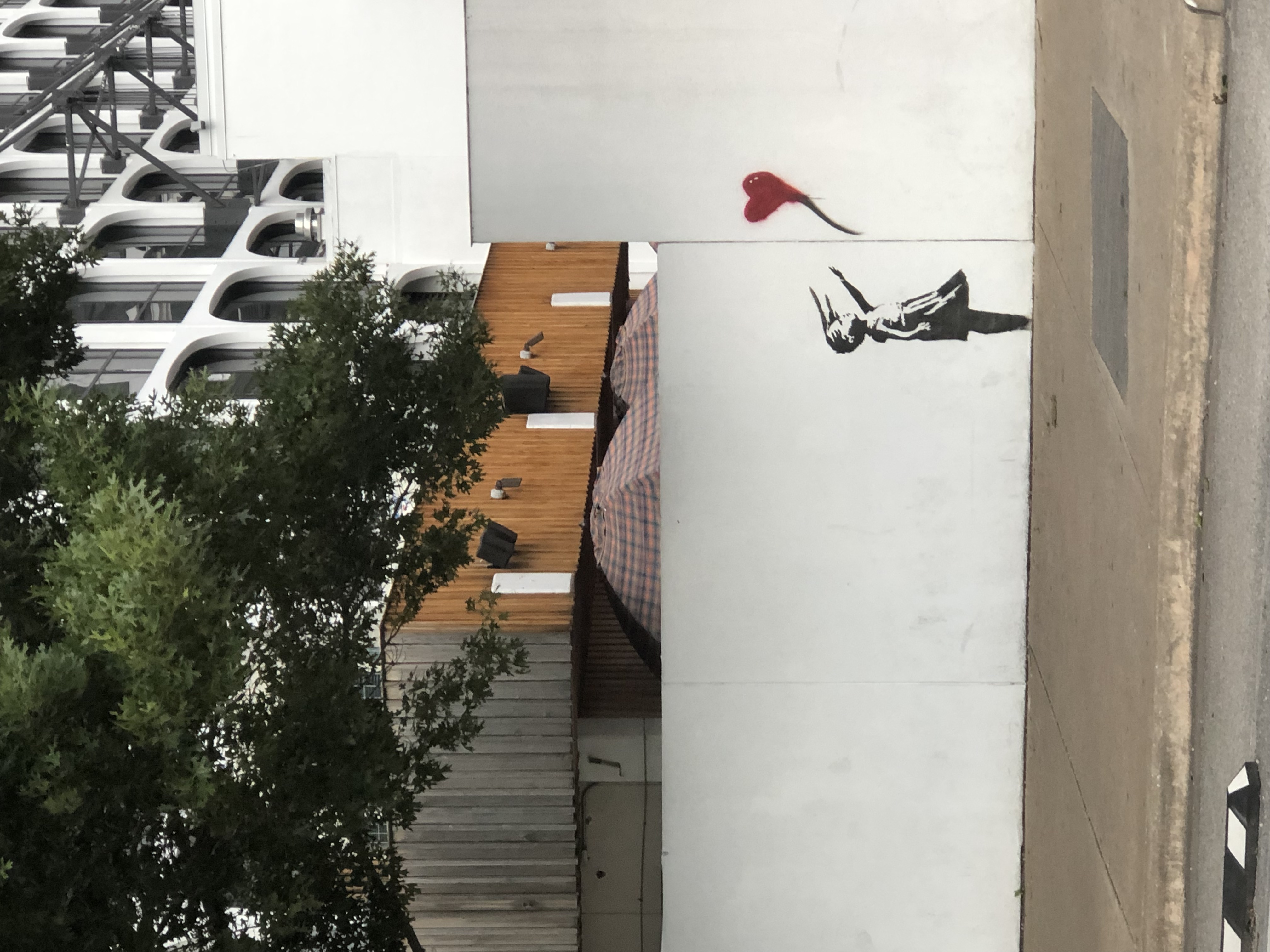
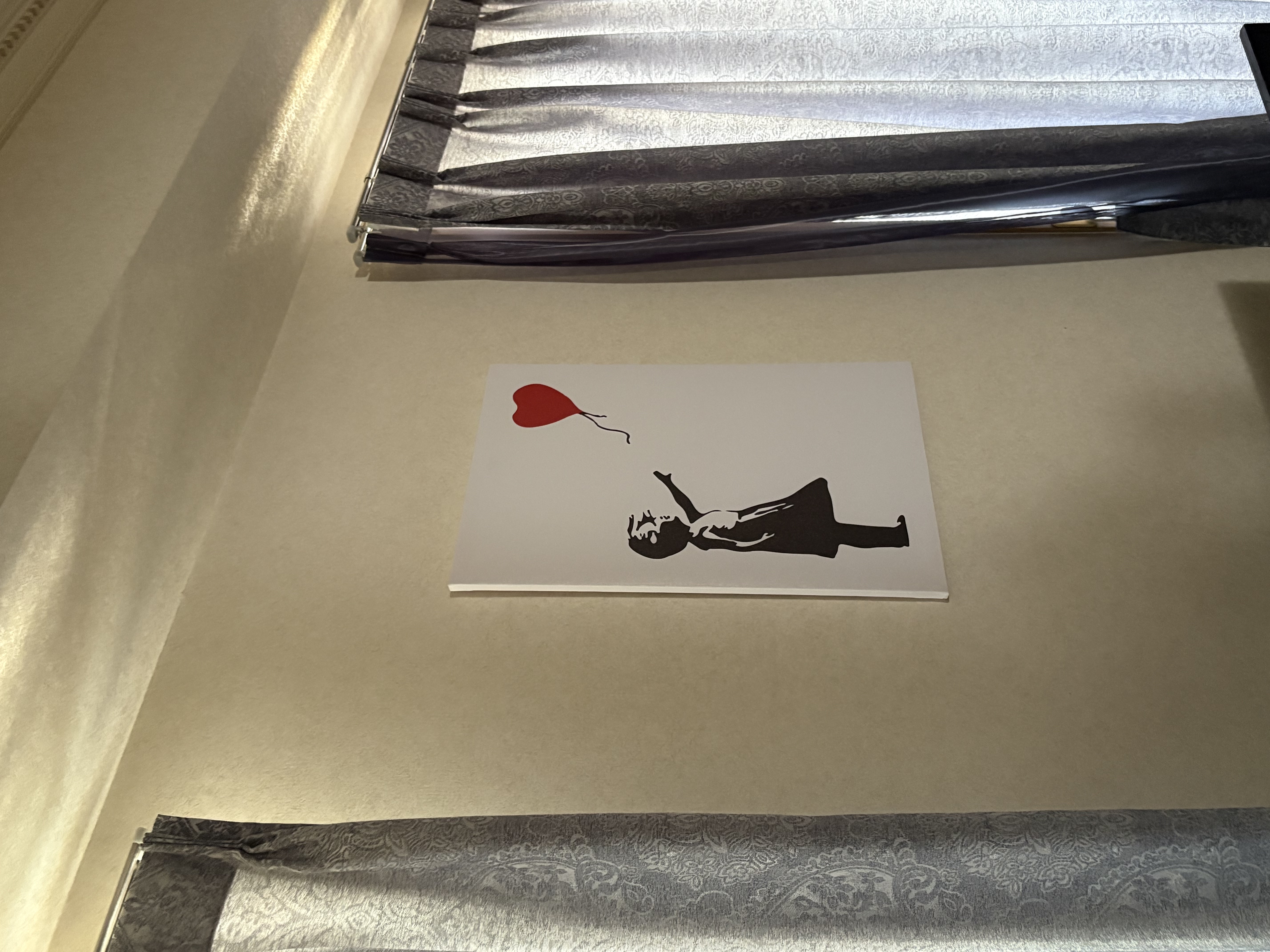
the same girl i’d seen on a wall in austin, near the bridge sun-faded, half-ignored, part of the outside world. here she was framed and clean—indoors, made tame.
And that kept happening this summer—familiar outlines showing up in new places. It wasn’t fate. It was just something repeating, and I kept noticing it.
wow. it’s gone now.
Andy is building a humanoid company in Japan from scratch. Not “In Japan” as a vibe but as in suppliers, visas, language, parts that don’t arrive, company structure, culture, etc.
One afternoon, we were all in the meeting area discussing the number of degrees of freedom in the robot’s foot. Masato-san suggested four—start with a simple toy model and study it before enlarging it. Research-wise, it made a lot of sense. And my experience trying to train policies seemed to support it.
Andy listened and kindly said “this is engineering management 101”.
Four isn’t wrong, but it’s slow. I’ve always liked the “start simple” story because it feels clean, almost academic. Andy’s point was more practical: in hardware, “simple first” can turn into doing everything twice. Another round of parts that don’t arrive, another vendor loop, another build you still have to ship.
Genchi genbutsu (現地現物)
“Go to the real place. See the real thing.”
A principle of the Toyota Production System: understanding should come from direct contact with the actual object and the conditions in which it operates, not from abstractions or proxies.
I liked the phrase genchi genbutsu because it sounds stricter than how I usually live. Not morally—just practically. Less negotiable. It points at places where being wrong costs something and you don’t get to talk your way out of it.
One of the members who currently works on computer vision told me about his earlier years in manufacturing. He described handling molten metal in the Toyota assembly lines, managing timing and temperature. He didn’t present it as a lesson, but to me it made genchi genbutsu click: learning under conditions where errors show up immediately. Stuff like that changed what I take seriously. It shrinks the range of things you can pretend are fine.
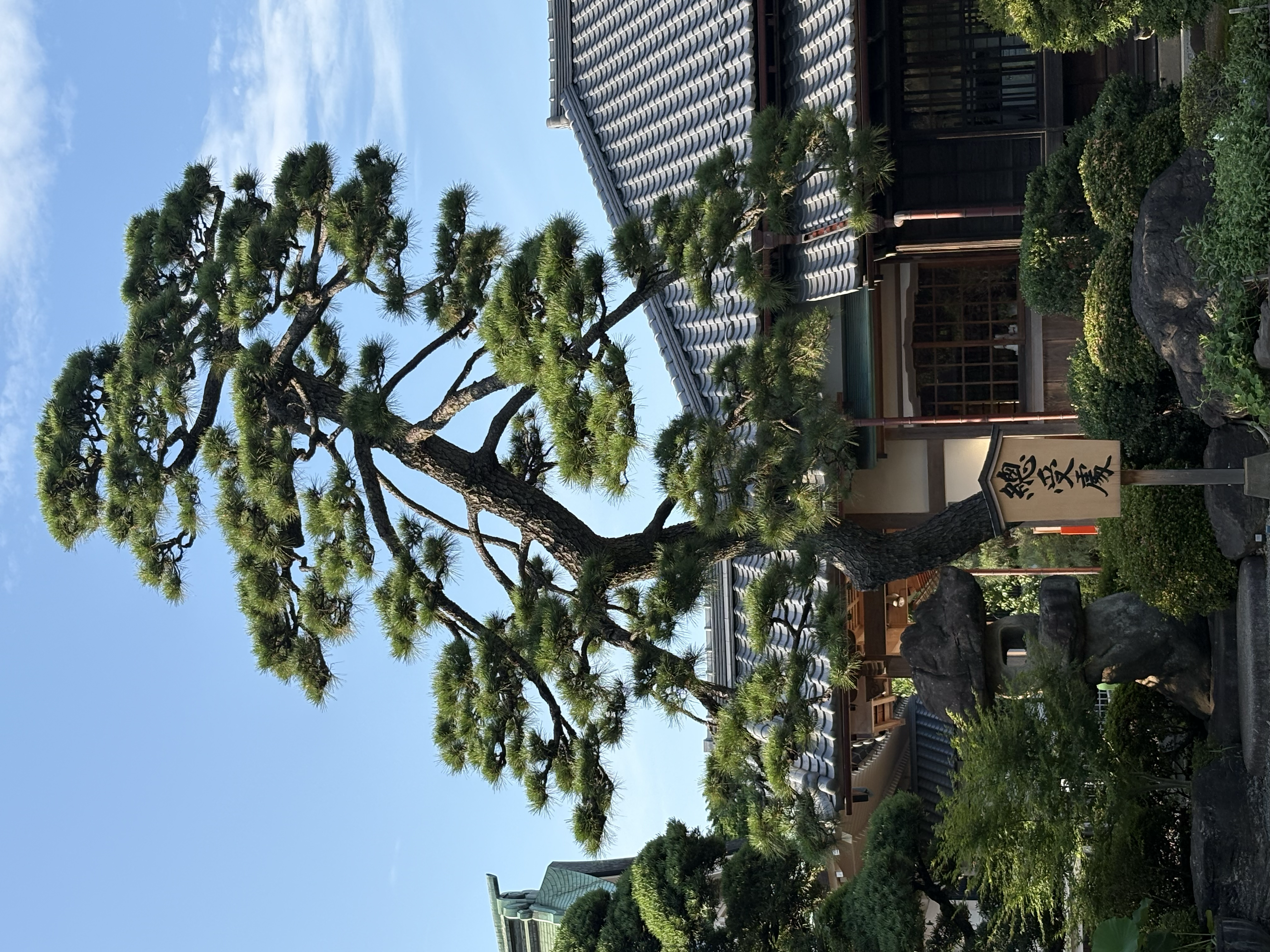 one of the temples i visited during the summer, famous for its cat statues but there were certain views that couldn’t be forgotten like this.
I didn’t realize it right away. It showed up on the walk home, passing the same vending machines I’d started using like mile markers.
Tokyo had a way of quieting the background noise for me. When the city stopped asking me to perform, I could hear myself more clearly. I saw how quickly I reach for “nonstandardness.” Some of it is real curiosity. Some of it—if I’m being honest—is cover. A way to stay convincing to myself while calling it ambition.
What bothered me was that the desire hadn’t changed—only the reason underneath it. Sometimes I can’t tell whether I’m pulled by the work itself or by something more embarrassing: fear of being ordinary, hunger for story, imitation that looks like taste from the inside. I don’t know what mix of that I’m made of. I just know that when I’m unsure what matters, I get restless in a way that eventually forces me to move.
Genchi genbutsu isn’t only about factories. It’s a rule against living through substitutes. I’m good at staying one step removed; if something stays debatable, I can keep it comfortable. The moments I remember from this summer weren’t like that. They had a kind of bluntness to them. Whatever I told myself afterward didn’t change what happened.
In San Francisco—at least in the crypto rooms I was in—a lot of things moved on vibes. Even the jargon had water in it—liquidity pools, depth—words that made it sound safer than it was. I could feel myself tracking the same signals everyone else was tracking: which VCs were circling, who was tweeting, what the narrative sounded like on Hacker News. It felt like momentum, even before anything had really been materially tested. That’s just what it feels like when attention moves faster than reality.
Japan isn’t just a new aesthetic, but I did learn a stricter definition of real. If I’m serious about creating things that matter, I have to go the place where the thing either functions or it doesn’t. 2
liminal spaces
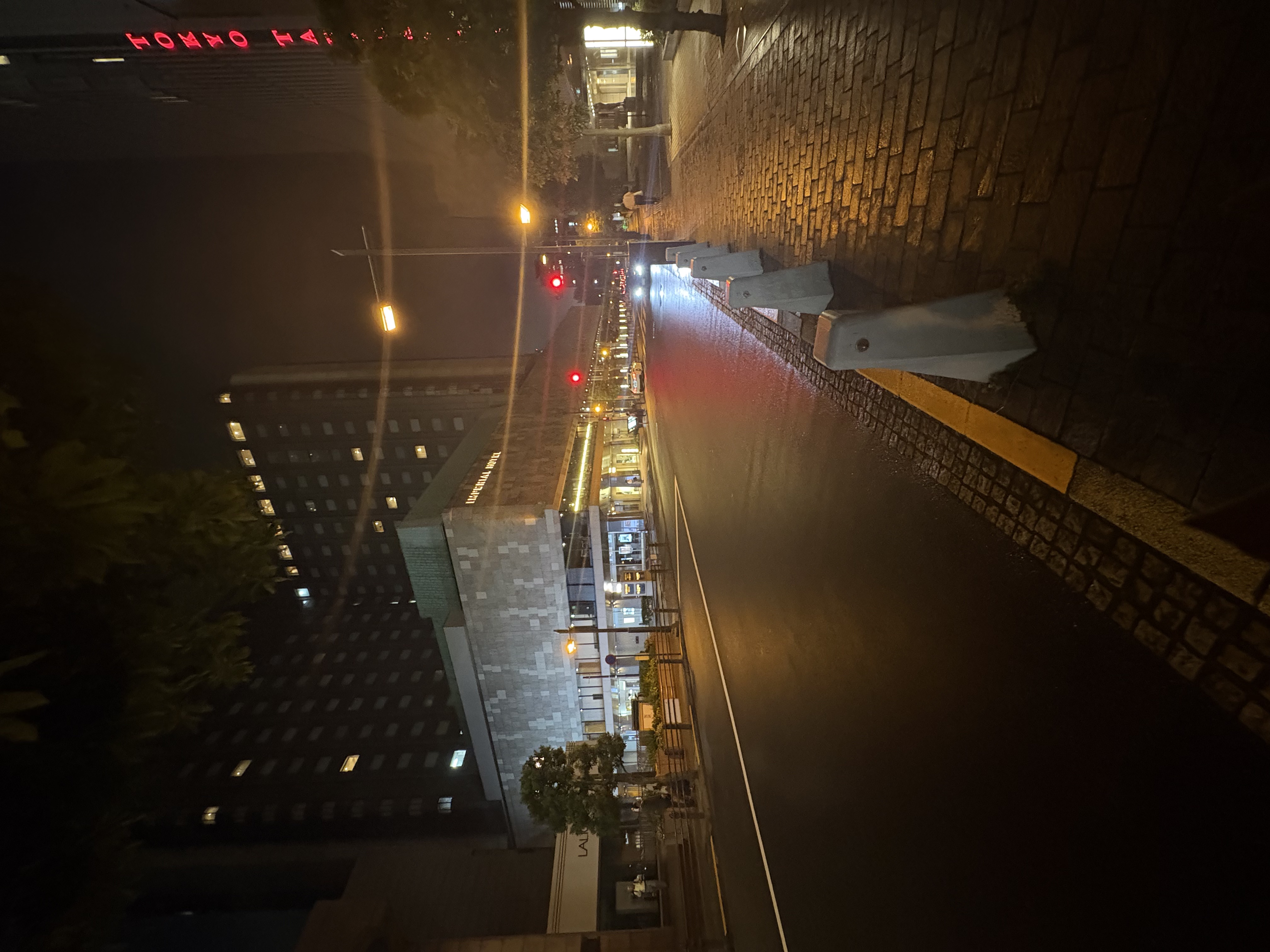 it just rained, walking back from the imperial gardens
This summer has felt liminal in an odd way: not between cities but between forms of belonging.
Nothing shattered. Things only thinned—stretched until the effort of holding them became audible. I talked to people I love less often, not because they mattered less, but because each call now required a small negotiation with time zones and fatigue.
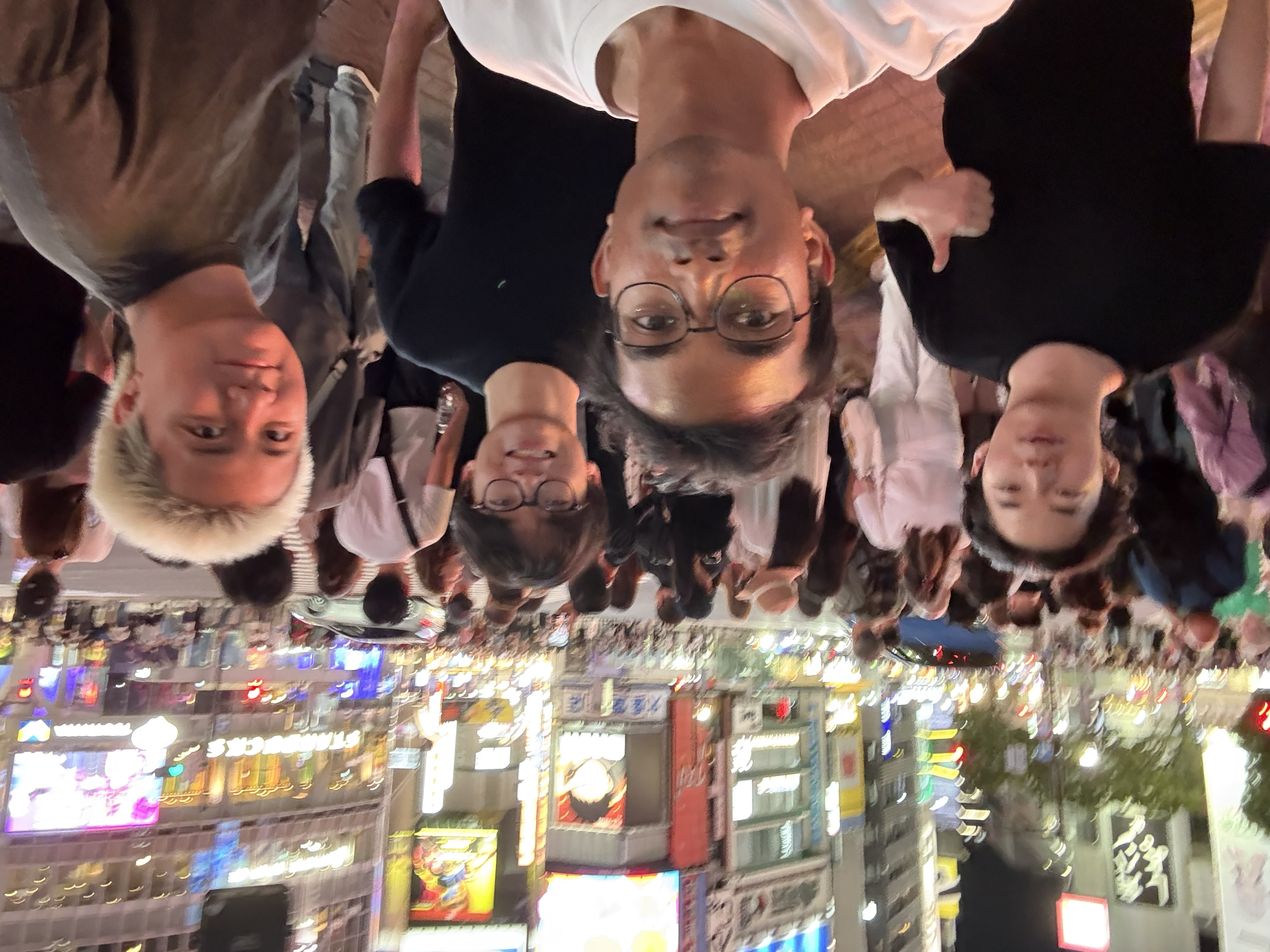 friends from the roppongi hacker house next to my airbnb
Meanwhile, Tokyo supplied companionship at arm’s length. Proximity did the work that distance was undoing elsewhere—buoyancy without intimacy. I started marking time by small things: the Takeshita side streets that stayed cool, which vending machines took my card, the same Taco Rico bags collecting by the door 3, the train up to Bunkyo to the Uzumaki house—peanut chicken and bok choy, old Ethereum friends talking sequencer design and coordination like it was casual, and me mostly just grateful to be at a table with someone across from me.
I stopped narrating updates to people who wouldn’t be present for the next chapter; without an audience nearby, the urge to sound coherent receded.
In time I noticed a different divide, less about connection and more about whether the future was already scheduled. Staying in touch turned into logistics. Some threads endured on inertia—easy to resume because the next meeting was implied. Others survived only when someone chose to re-enter them, again and again, with no scheduled Google Calendar event to make it automatic 4. Along the way, ideas I’d carried about identity, success, and ambition slipped loose—not dramatically, but by becoming unnecessary.
I want to do things without guarding every edge. The upside isn’t polish but the kind of asymmetry that Nassim Taleb writes about, where volatility teaches instead of eroding. This summer loosened the gravity of an identity that I’ve worked within for a significant part of my life. Now what remains feels lighter, but also more deliberate.
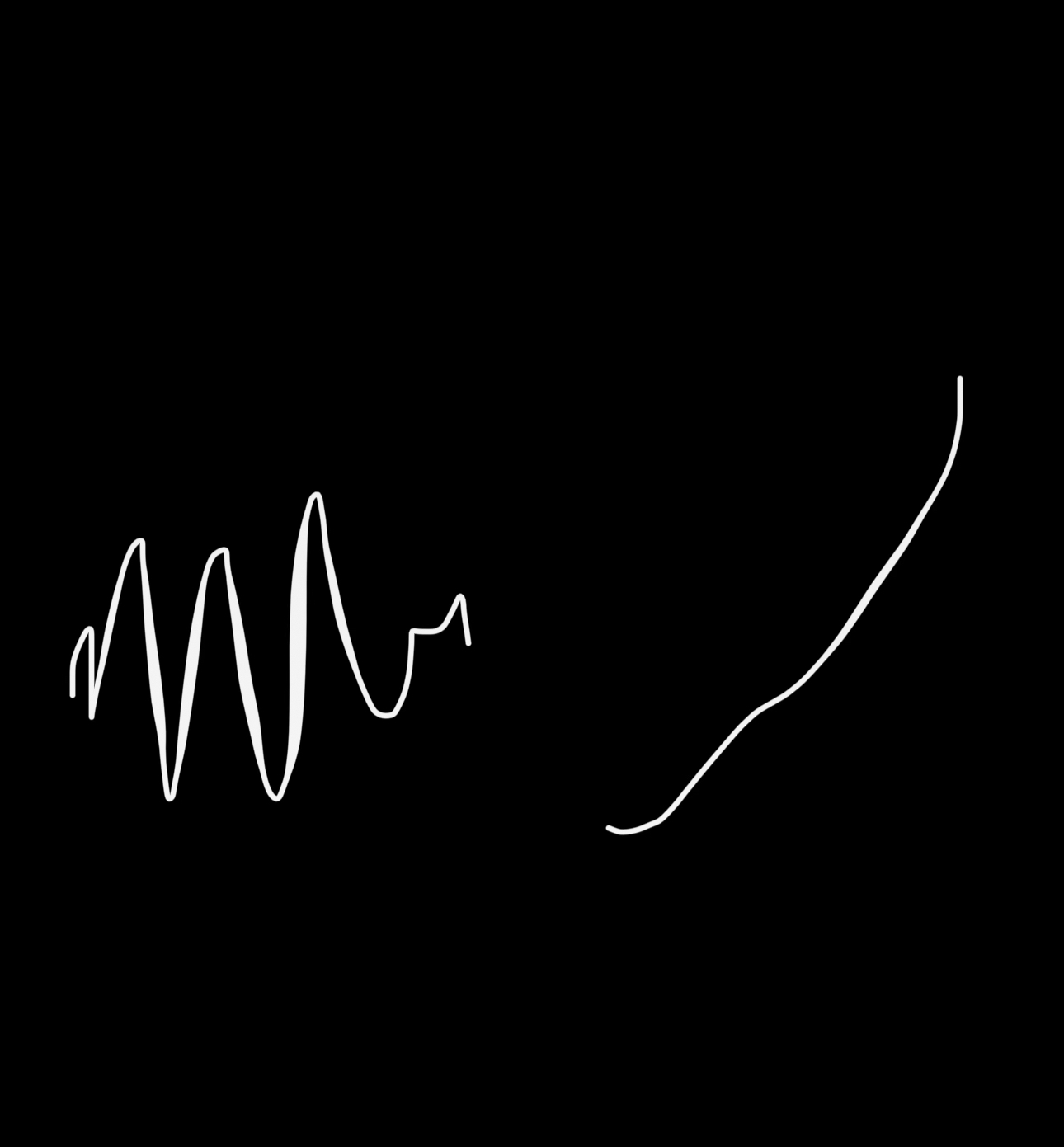 a sketch from my notes app that i keep as my phone background. the left captures the instability of the present; the right is my reminder to zoom out.
I’d been in it so long I stopped noticing the current. In markets, a day can disappear into tiny shifts and still feel like work. With people, it was similar: staying where the temperature was familiar, where the next interaction was implied.
Tokyo didn’t fix anything. It just gave me enough quiet to hear my breathing again.
There are some incredible stories on this reddit page.↩︎
Earlier this term, I visited a local HVAC conference and learned about the industry by talking with technicians, engineers, and private-equity investors. From the top down, the language was financial—EBITDA, rollups, multiples. From the bottom up, it was personal: who you trusted, who returned your calls, who you’d let into your house. Entire distributors ran on those relationships. The spreadsheets mattered, but the business held together because people knew each other.↩︎
I kept having to Venmo someone for lunch.↩︎
I regularly talk to an older online tech friend from Australia now :)↩︎